Each one can stand alone. Most programmes borrow from two or three, then close in a single report. If you are between them, say so when you call or write.
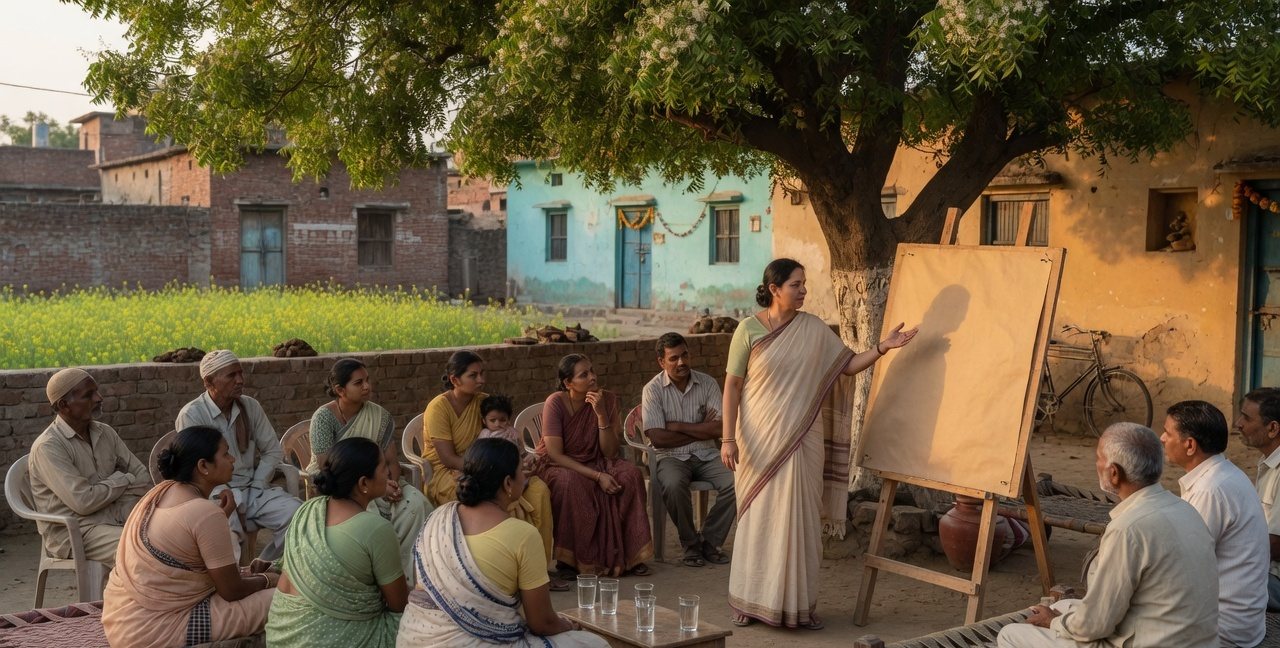
A community meeting in a village courtyard.
01
Promotional & campaigning services
Campaigns for brands, schemes, and public messages, in cities and in villages. The work covers awareness, behaviour change, outreach, and the programmes that bring people together on the ground.
The work covers
Brand promotion and awareness campaigns, urban and rural
Social and behaviour change communication (SBCC)
Government scheme promotion and public outreach
Political, social, and institutional campaigning support
On-ground activation, roadshows, rallies, and community engagement
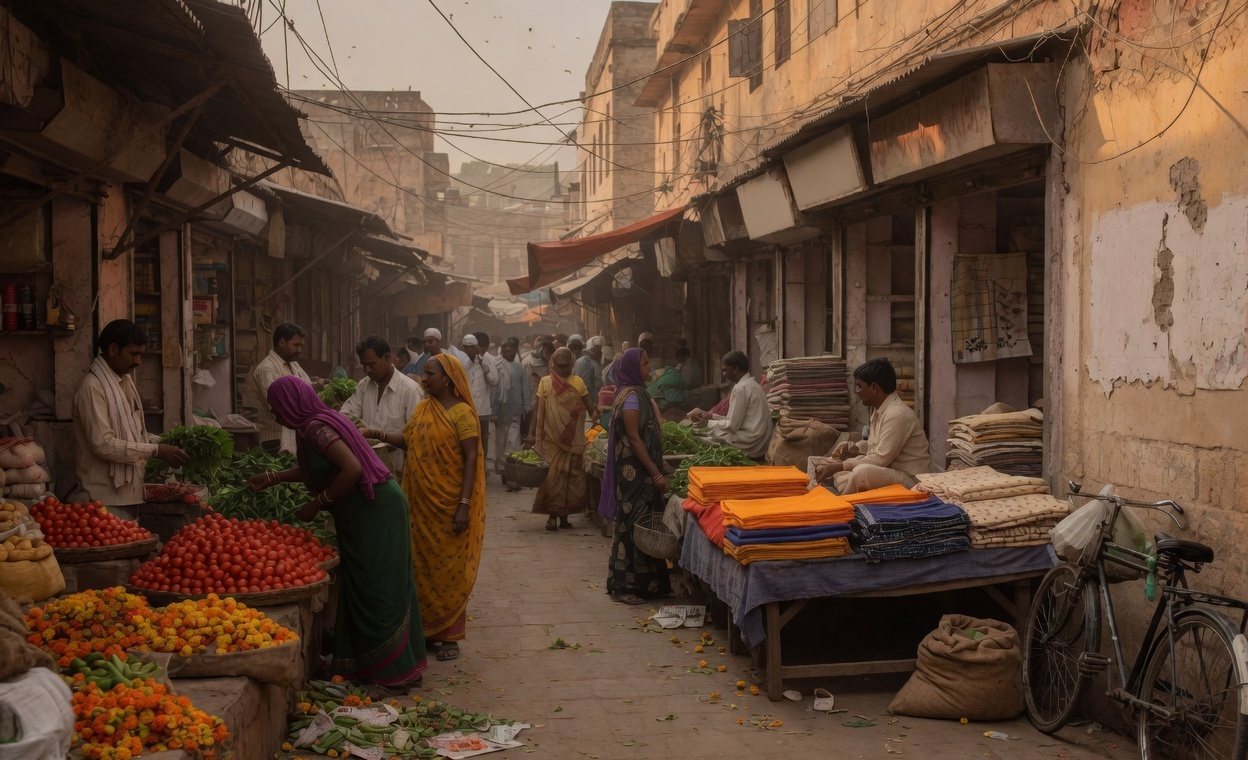
A town market, where branding meets the people who buy.
02
Marketing & branding solutions
How an institution is positioned, remembered, and met by the people it serves, from a rural market to a city.
The work covers
Strategic marketing and communication planning
Brand positioning, recall, and visibility
Market penetration and expansion
Rural, semi-urban, and urban marketing
Consumer engagement and feedback
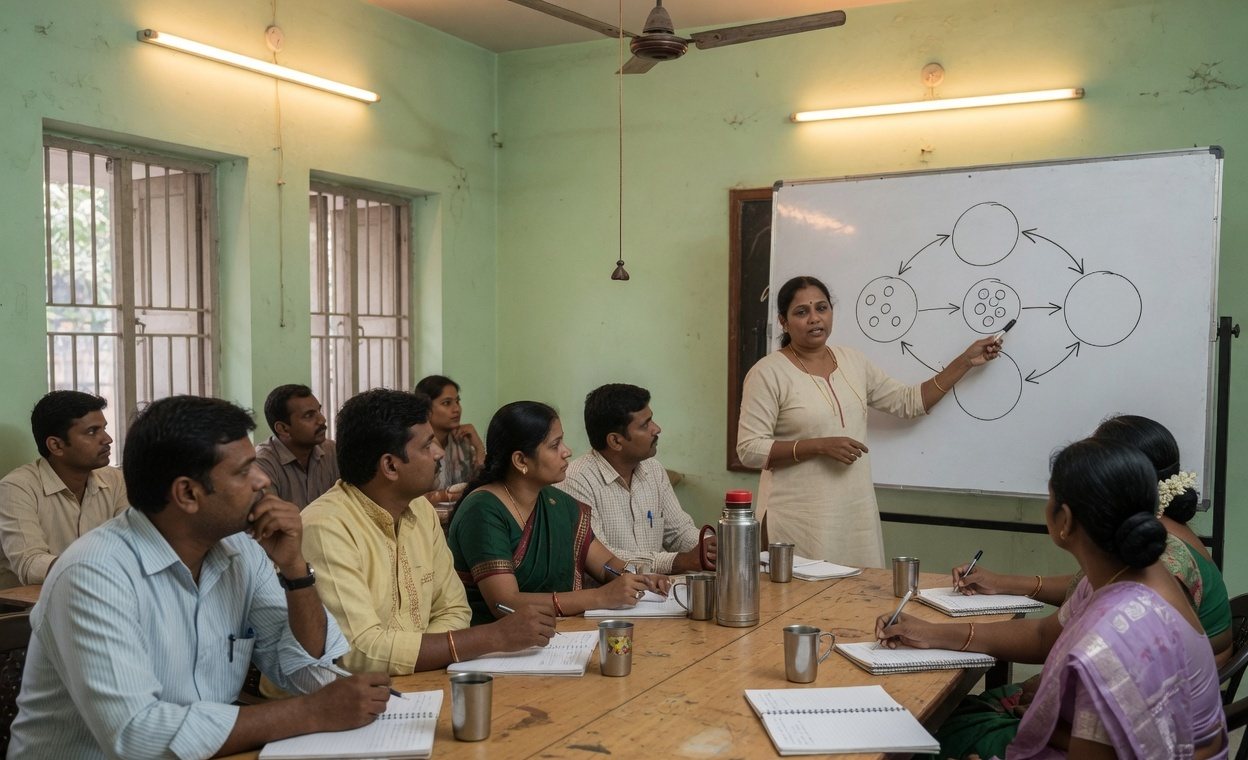
A training room for field staff and trainers.
03
Training & capacity building
Learning for institutions, field staff, enumerators, and the trainers who will carry a programme after the first workshop.
The work covers
Skill development and professional training
Institutional and organisational capacity-building workshops
Training of Trainers (ToT)
Field staff, enumerator, and stakeholder training
Customised learning and development
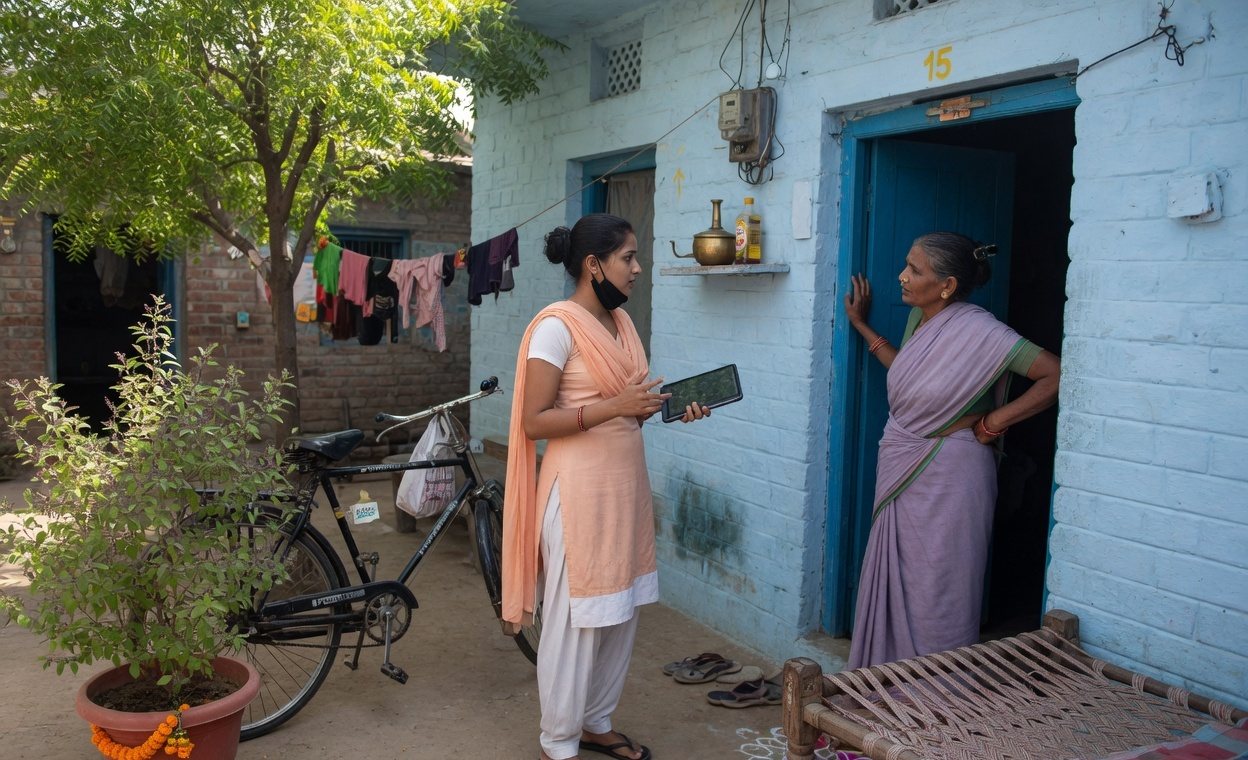
A household conversation during a survey.
04
Market & social research
Studies of markets, communities, and programmes, using qualitative and quantitative methods, written so a decision can follow.
The work covers
Market research and consumer behaviour analysis
Social research and impact assessment
Baseline, midline, and end-line surveys
Qualitative and quantitative methodologies
Policy research and programme evaluation
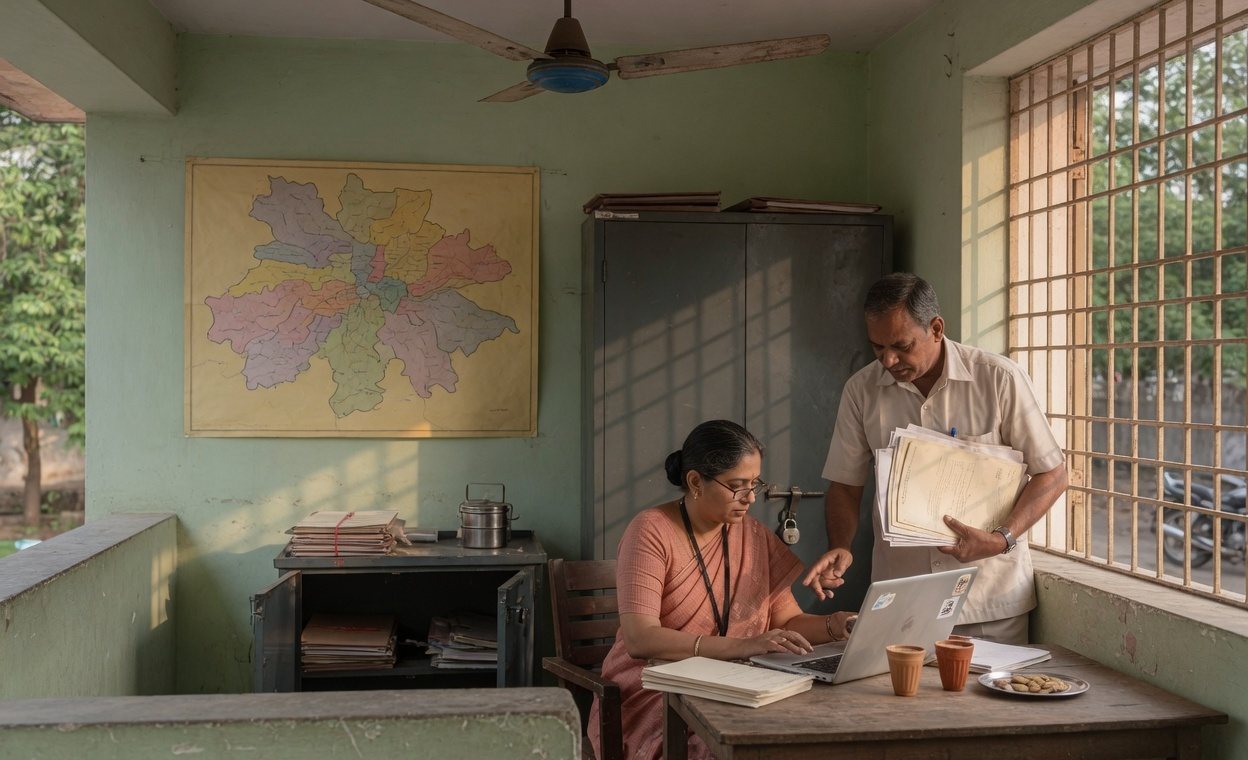
Field papers reviewed while the work is still running.
05
Monitoring & evaluation
A way to watch a programme while it runs, and to measure what it produced. Reporting can sit in a periodic note or on a dashboard.
The work covers
Programme monitoring and performance tracking
Monitoring frameworks and indicator development
Third-party monitoring and independent assessments
Outcome, output, and impact measurement
Periodic reporting and dashboard-based insights
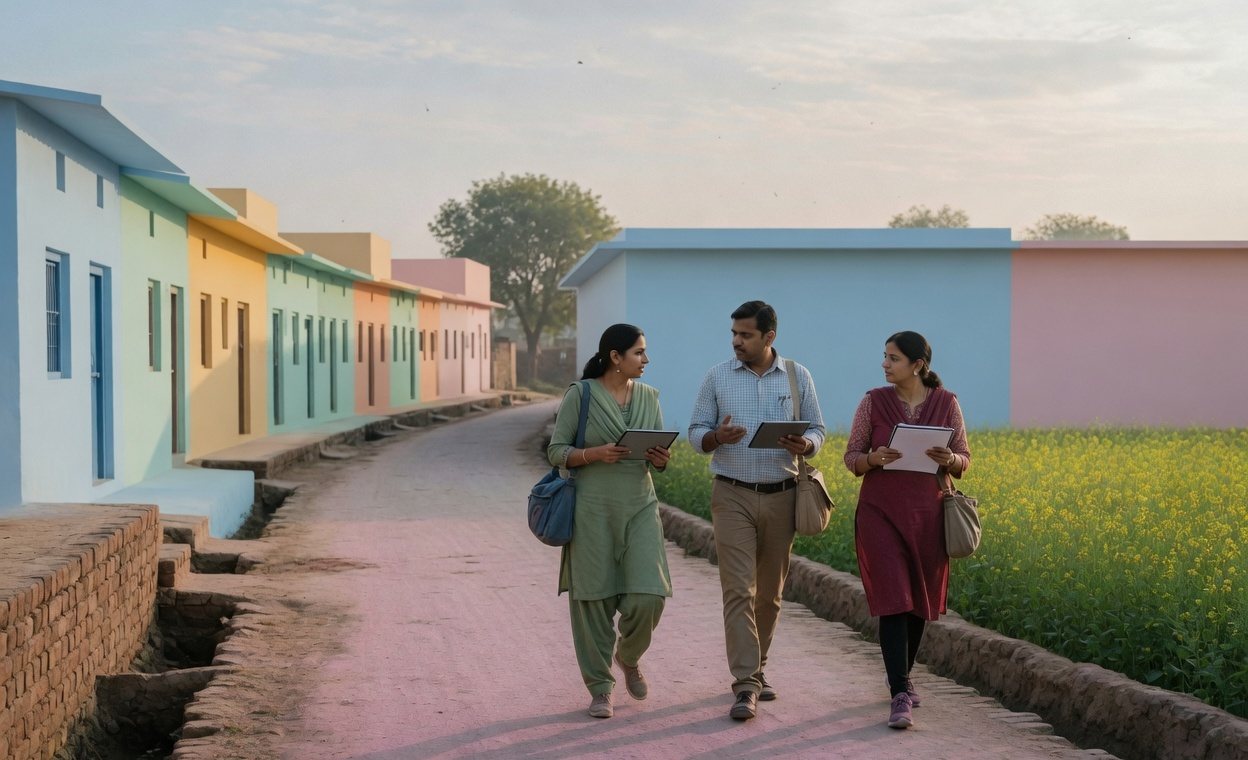
A field team moving between houses.
06
Data collection & field operations
Primary and secondary data, collected at household, institution, beneficiary, and stakeholder level, with the manpower to hold a large field.
The work covers
Primary and secondary data collection
Household, institutional, beneficiary, and stakeholder surveys
Digital collection on tablet or mobile, and manual collection
Large-scale field operations and manpower management
Data validation, cleaning, and analysis support
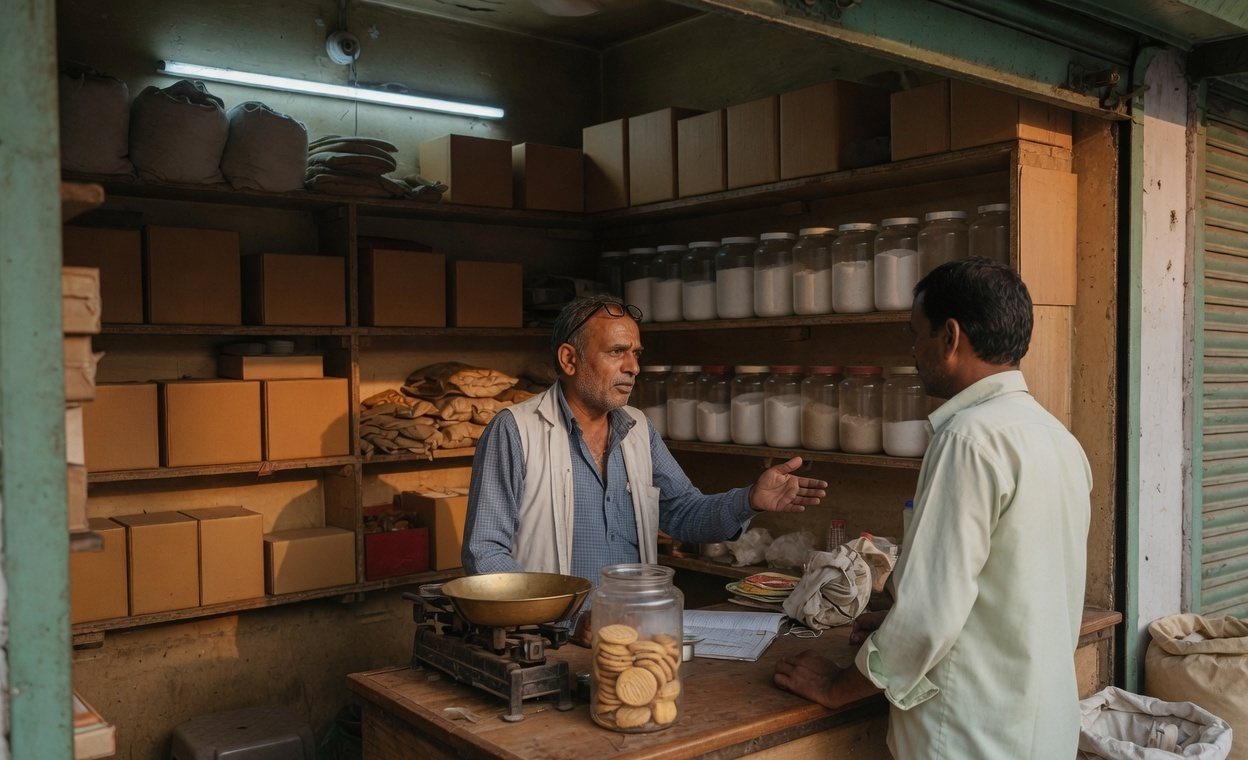
A neighbourhood counter, seen the way a customer meets it.
07
Mystery audit & compliance audits
A visit that sees service the way a customer meets it, and a compliance check against the process the organisation has set.
The work covers
Mystery shopping and service-delivery audits
Quality assurance and process compliance audits
Customer experience and satisfaction assessment
Gap analysis and corrective-action recommendations
Audit reports with actionable insights
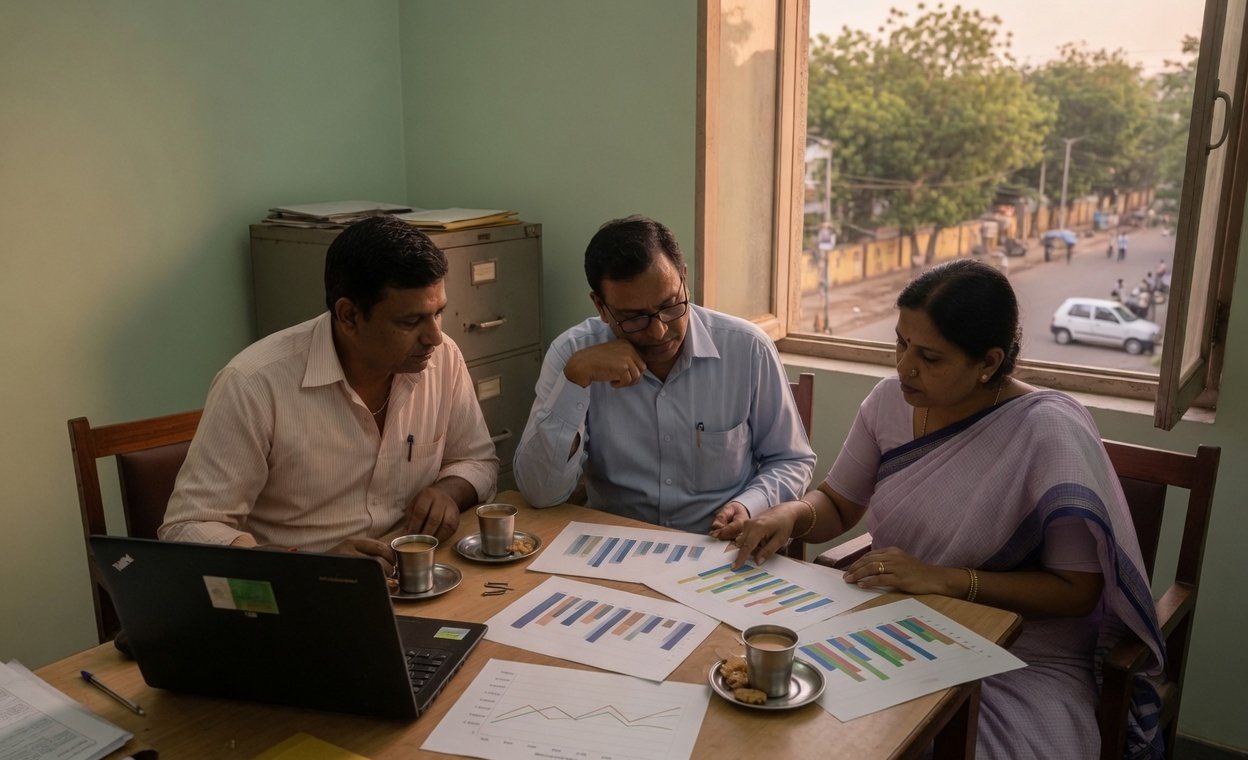
Findings read together before the report is closed.
08
Methodology & work approach
Conclusion Cart follows a structured and transparent methodology. The same six steps sit under a campaign, a survey, a training series, or an audit.
The six steps
Needs assessment and planning
Tool and framework development
Training and deployment of field teams
Execution and real-time monitoring
Data analysis and validation
Reporting, insights, and recommendations
Evening in a North Indian city. The office is in Lucknow; the field covers eight states.
09
Working geography
The registered office is in Gomti Nagar, Lucknow. Field networks and operations run across eight states.
Where the firm works
Uttar Pradesh
Madhya Pradesh
Bihar
Rajasthan
West Bengal
Odisha
Maharashtra
Himachal Pradesh
Begin with the decision you need.
Name the programme, the state, and the date. Write to connect@conclusioncart.com or call +91 94508 62265.